This Isn’t Genocide. Think for Yourself
Too Many Lives Depend on It
Israel is not committing genocide. Here’s why.

Every time I open LinkedIn, I see thoughtful, intelligent people like former classmates, network peers, friends – reposting slick reels, infographics, and emotionally charged slogans that label Israel’s actions “genocide.” These aren’t anonymous activists. These are people I respect. And yet they share soundbites with zero nuance.
It’s not accidental. Professional networks are now a pipeline for emotionally designed content that bypasses reason and goes straight for the heartstrings. It works. And it’s dangerous. When we leave our moral judgment to prepackaged and selective outrage, innocent people pay. On both sides. Israelis and Palestinians. Jews and Muslims. Mothers, fathers, children, grandparents.
We must do better. That starts with facing the truth, and with understanding what words like “genocide” actually mean.
What does genocide mean, and where it came from?
Raphael Lemkin, a Jewish-Polish lawyer, coined the word “genocide” in 1944 to name the singular evil of the Holocaust. The UN’s 1948 Genocide Convention built on his work and makes the law clear: genocide is not measured only by images of destruction or by body counts. It’s defined by intent – an intent to destroy, in whole or in part, a national, ethnical, racial or religious group. Killing members of a group, causing serious bodily or mental harm, deliberately inflicting conditions to destroy the group, preventing births, or forcibly transferring children, those are the acts that constitute genocide when paired with that intent.
Intent is the crux. Without it, images of suffering, however terrible, do not legally equate to genocide.
Clearly, there are enough legal and scholarly articles on why Israel’s war in Gaza is not a genocide. But let me offer some personal insights, because I know most people won’t take the time to read scholarly articles. This is because emotional images and catchy media headlines are often enough to turn public opinion against Israel.
I’ve been to Israel several times since October 7. I’ve spoken with Israelis – Jews, Muslims, Christians, and walked alongside them as the country tries to recover and defend itself. Here’s what I have seen and heard:
Israelis do not want to kill their Arab neighbors. They want to live. But peace requires both parties to want peace. Going by the logic of anti-Israel activists who have since long accused Israel of “ethnic cleansing” and “genocide”, Israel supposedly seeks to establish a Jewish-only state, and therefore aims to remove Arabs. However, a state committed to ethnic cleansing doesn’t allow a large Arab minority to vote, serve in parliament, work as doctors, teach in schools, or walk the streets. Muslim Arab citizens of Israel do all of these things. Many are active in civic life; some serve in the military and in hospitals, saving lives regardless of background. Before October 7, thousands of Gazans held work permits to enter Israel, earning livelihoods and feeding families. Would a genocidal regime permit that?
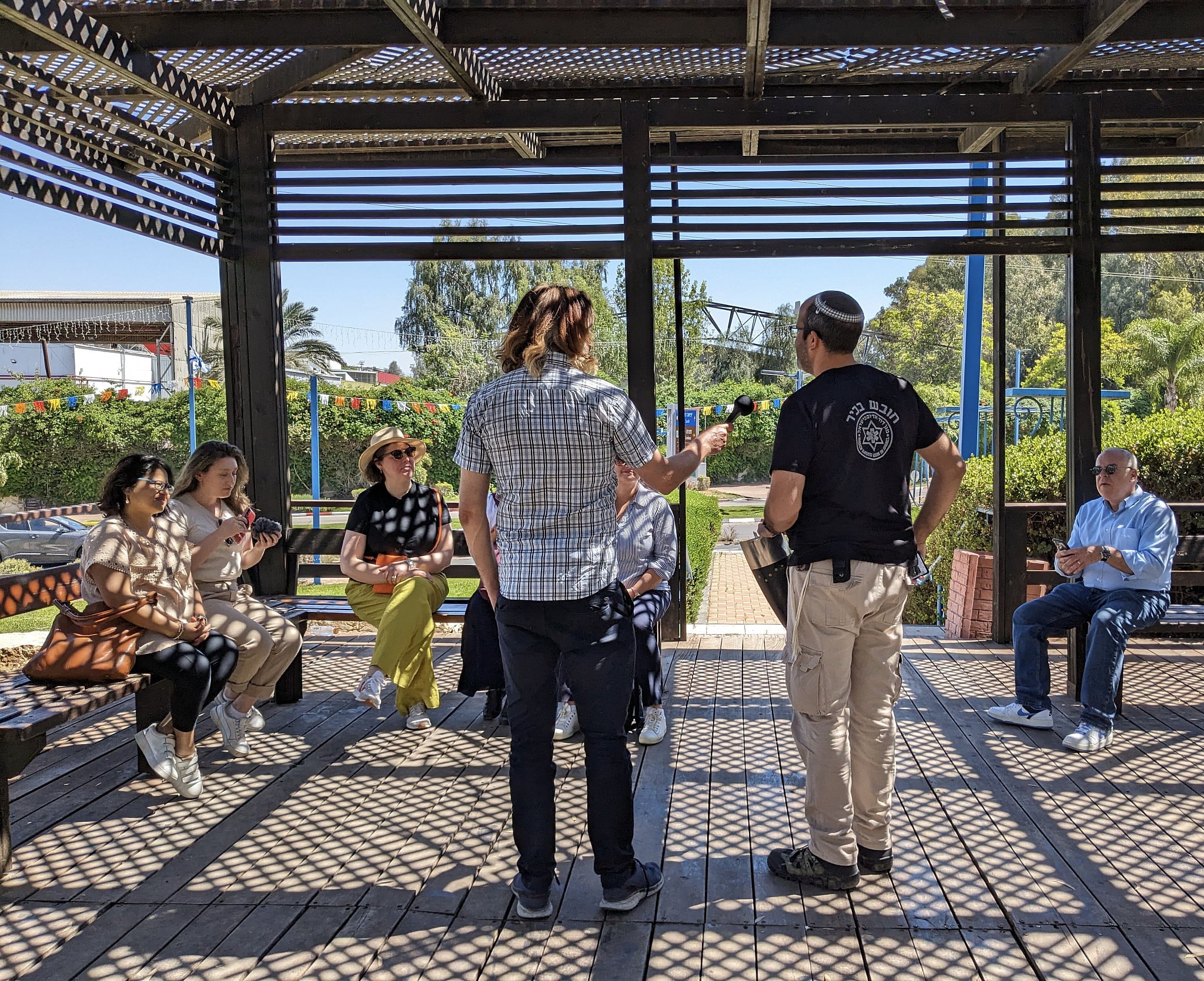 |
| The author and a delegation led by Genesis123 foundation visited Sderot and other Gaza border towns in May, 2024. Sderot, a city in South Israel was heavily affected by the Hamas-led terror attack on October 7th, 2023. |
Gaza’s population is growing - that alone challenges the genocide narrative. Genocide does not produce population growth. Images of destruction tell part of a story; they do not prove the existence of a deliberate policy to wipe out a people. The media is quick to highlight statements from certain Israeli politicians, such as calls to ‘wipe out Gaza completely,’ or to emphasize comments framed as ‘racist remarks,’ including comparisons of Arabs to Amalek, the biblical enemy of Israel. These statements are often taken out of context, and Israeli politicians (particularly those on the right) are instantly labeled as racist. Whatever happened to neutral, unbiased journalism, I wonder?
And let’s be blunt about capacity and choice: Israel has the military power to level Gaza quickly. It has not. Why? Because there is a difference between overwhelming power and the moral and legal limits a democracy must contend with. Israeli soldiers are often sent into the most dangerous, civilian-populated terrain, street by street, house by house, in order to fight terrorists who purposefully hide among civilians. Many Israeli soldiers die doing this. That is restraint under impossible conditions, not an intent to exterminate a people.
History is being inverted in real time
The word “genocide” was birthed to describe what the Jewish people endured. And now, in the era of viral misinformation, Jewish people are being accused of committing genocide. That inversion is not merely wrong - it’s obscene.
The world sees footage of military might and scenes of suffering and jumps to lazy conclusions. It sees tanks, not the rockets fired from schools and mosques. It sees devastation, not the strategy of an organization that embeds itself within its own population and openly declares Israel’s destruction as its goal.
People aren’t asking the most important questions: Who started this war? Who hides behind civilians? Who glorifies death instead of life? Instead, they react, and that reaction is being weaponized.
If each side laid down its weapons…
If Israel lays down its weapons, there will be no more Israel. That is not hyperbole. It is the declared aim of Hamas, Hezbollah, Iran - and, worryingly, echoed by some activists in the West.
If Hamas lays down its weapons, the war will stop. Rebuilding, demilitarization, education, and the slow work of building trust could begin - but only once rockets and terror stop.
Please start with the hostages!
Do not let this be sidelined: There are 48 people who are still held hostage in Gaza, for over 700 days. Some are alive and being tortured. Some have passed away. Their release should be the non-negotiable starting point for any serious conversation about ending this war. Where is the global outrage for them? Yes, countless civilians in Gaza are suffering. We don’t want to see more death and destruction. But if we truly care about the women and children there, our first demand must be the immediate release of all hostages. Only then can the path toward ending this war begin.
What you see on social media isn’t the whole story. Look deeper.
Yes: Gaza is suffering. Yes: civilians are dying. The tragedy is real and must be answered with urgency and care.
But reposting a graphic that declares “genocide” without grappling with history, motive, context, and responsibility doesn’t help civilian victims. It helps the perpetrators who use propaganda to their advantage. Hamas uses its people as shields, diverts humanitarian aid, and continues to glorify violence. By simplifying the story into slogans, we enable those tactics and prolong the pain on both sides. And that is exactly what Hamas wants.
What you can actually do
Think for yourself. This is not a time for indifference. It is a time for moral clarity, and for calling out real evil.
Learn what genocide legally and historically means. Stop weaponizing the word. Demand the release of all hostages. Call out the use of civilians as shields. Hold the UN, neighboring states, and international actors to account - and pressure them to provide real refuge, to cut off terror financing, and to lead with honest diplomacy and humanitarian care.
Remember: both Israelis and Palestinians are human beings. Not hashtags. Not pawns.
Let’s have a real conversation
If you’ve read this far, thank you - you’ve chosen to think rather than merely react. That makes you rare right now. The false accusation of genocide is not an abstract error: it costs lives, spreads hate, delays peace, and silences truth.
Peace begins with truth. Truth begins with thought. Thought begins with you.
Don’t just repost. Don’t just react. Think. Because too many lives depend on it.
The tragic death of Charlie Kirk has inspired millions, including myself, to engage in respectful debates and discussions. We may not always agree, and everyone brings different perspectives and opinions. But respect, and a willingness to challenge long-held beliefs in the pursuit of truth, is essential. Lives are now being lost because of careless posts and TikTok-fueled misinformation, and we cannot afford to stay silent or thoughtless.
Comments
Post a Comment